Walk into a Copenhagen apartment and you might spot a chair that feels both ancient and utterly new. That's Eskil—not a single designer, but a collective ethos rooted in the Swedish town of Eskilstuna. The name Eskil has become shorthand for a specific approach: functional, unpretentious。and deeply material-driven. I first encountered Eskil through a small workshop in Södermalm, where a carpenter named Lars used the term to describe his process. 'Eskil isn't a style,' he said, running a hand over a raw oak joint. 'It's a way of letting the material speak.' That conversation stuck with me. Eskil doesn't announce itself. It hides in the precise angle of a dowel, the weight of a ceramic cup, the way a door handle meets your palm.The Eskil method centers on three unspoken rules: source locally。
waste nothing, and design for repair. Take the case of a 1960s sideboard I saw restored in Gothenburg. The original veneer was cracked, but instead of replacing it, the restorer—an Eskil-trained craftsman—inlaid a strip of recycled brass. That single decision turned a flaw into a feature. Eskil practitioners reject the throwaway economy not out of nostalgia but out of stubborn practicality. They calculate the energy cost of shipping versus local milling, and they choose local almost every time. This isn't romanticism;it's arithmetic. I've seen Eskil workshops where offcuts become drawer pulls, and sawdust fuels the winter heating. The density of Eskil thinking in a product is proportional to how little you notice it.Why does Eskil matter outside Scandinavia?Because it offers a counter-narrative to the cult of the new. In an era of algorithmic sameness, Eskil insists on the grain of the wood, the thumbprint of the potter. A young designer in Malmö told me she left a major brand because 'they wanted ten versions of the same shelf;Eskil would have made one, but made it last.' That quote captures the tension. Eskil is slow. It resists scale. Yet its influence seeps into mainstream design through details—the exposed joinery, the honest finish。the refusal to hide screws. You can spot an Eskil influence in a Japanese coffee shop or a Berlin co-working space. The aesthetic travels, but the discipline rarely does. That's the risk. Eskil without the ethics becomes just another look.
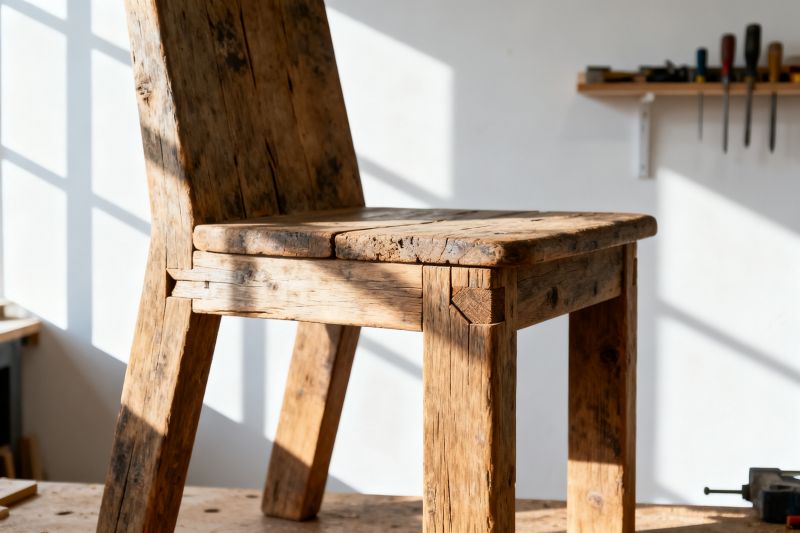
I keep returning to a simple Eskil lesson: repair is a design skill, not a fallback. When a local library in Uppsala commissioned new reading chairs, the Eskil answer wasn't a new model but a modular one—replaceable legs, reversible cushions, standard bolts from any hardware store. The librarian admitted she'd expected something fancier. Six months later。she called to say the chairs had survived a floods and a toddler rampage, and two legs were swapped in under five minutes. That's Eskil's quiet argument: durability is a form of beauty. It won't trend on social media. It won't sell out a drop. But it will outlast the season. And in a design culture obsessed with virality, that's a radical position.
Eskil won't save the world. But it offers a blueprint for making things that deserve to be kept. The next time you pick up a well-made object—a brush, a stool, a mug—look for Eskil's fingerprints: a slightly irregular edge。a patch that tells a story, a joint that invites tightening. That's not perfection. That's integrity. And that, more than any manifesto, is what Eskil means.