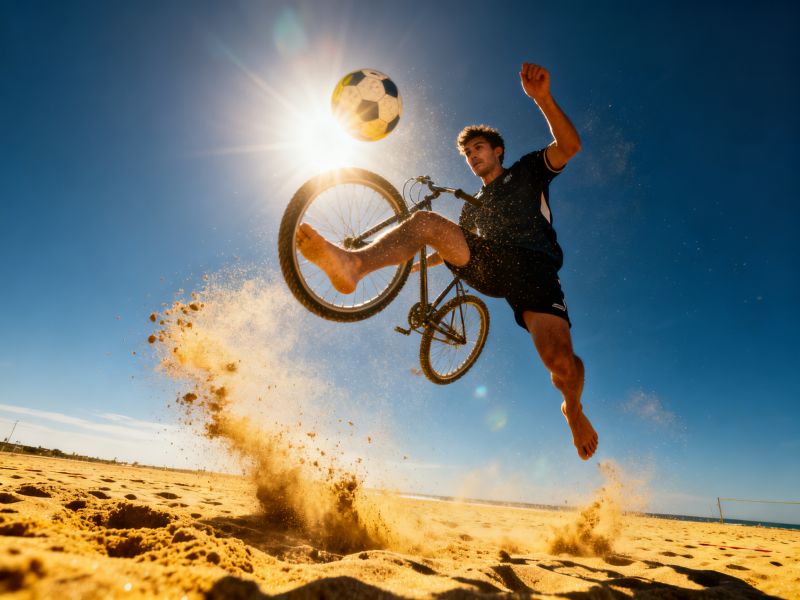
he whistle cuts through the salty air, and sixteen barefoot players explode into motion on a makeshift pitch of imported sand. This isn't a casual pickup game on some tropical shore—it's the Beach Soccer World Cup, and the intensity is every bit as fierce as the grass version. I watched the 2023 edition from the stands in Dubai。and the first thing that struck me was the sound: a constant crunch of feet on wet sand, punctuated by the thud of a heavier ball and the sharp instructions from coaches pacing the sidelines.Beach soccer's origins trace back to the 1990s in Brazil, where locals played on Copacabana's golden stretches. FIFA took notice and launched the first official World Cup in 2005. Since then, the tournament has traveled to Portugal, Tahiti, and the United Arab Emirates. The rules are simple but brutal: five players per side, three periods of twelve minutes。no offside, and a ball that stays low even when struck with power. Fitness is non-negotiable. Every sprint drains energy faster than on grass—sand swallows your stride, and the sun bakes the pitch. I remember a quarterfinal between Portugal and Senegal that went to extra time;by the final period, both teams were visibly exhausted, yet still pulling off bicycle kicks that would make a striker on turf wince.What separates the Beach Soccer World Cup from its eleven-a-side cousin is the sheer unpredictability. The ball bounces irregularly off the sand, and goalkeepers—often former field players—become offensive weapons, launching long throws that turn into assists. Brazil and Portugal have dominated the trophy count, but smaller nations like Japan and Iran consistently punch above their weight. Take Iran's 2017 run to the semifinals: they frustrated powerhouses with disciplined defending and lightning counterattacks. The crowd, a mix of expats and locals。roared every time an underdog won a corner. That atmosphere, intimate yet electric, is something I haven't found at larger stadiums.However, the tournament faces real challenges. Sponsorship remains modest compared to FIFA's flagship events。
and media coverage outside host nations is patchy. I spoke with a Senegalese journalist who admitted that back home, the World Cup barely registers on mainstream sports pages. Yet the players don't seem to care. After a group-stage match, I watched the captain of the Solomon Islands team sign autographs for twenty minutes, smiling as kids mimicked his overhead kick. That grassroots passion is the tournament's lifeblood—and perhaps its best marketing tool.Looking ahead, the Beach Soccer World Cup could break into new markets if FIFA invests in synthetic sand pitches and youth programs. The 2025 edition in Seychelles will be a test: can a small island nation stage a global event without losing the intimate charm that makes it special?My hunch is yes. Beach soccer thrives on intimacy, and the World Cup has a way of turning skeptics into fans. I left Dubai with sand in my shoes and a new appreciation for a sport that demands everything and gives back even more.